Research conducted by Answers in Genesis staff scientists or sponsored by Answers in Genesis is funded solely by supporters’ donations.
Abstract
The various biblical texts dealing with the sojourn in Egypt are best understood by a short sojourn interpretation. Its exegetical strengths are that it does not require adding generations to Levi’s and Judah’s genealogies, as well as being the plainest interpretation of Paul’s statement in Galatians 3:16–18. This paper proposes exegetically sound ways to understand Genesis 15:13–16 and Exodus 6:16–20 in a short sojourn context, as those are seen as being the strongest long sojourn passages. This paper establishes short sojourn as a plausible understanding, but stops short of claiming to disprove the long sojourn. Both views are possible young-earth creationist positions.
Keywords: Sojourn, Egypt, Israel, 215, 430.
Introduction
Biblical creationists affirm the historical Christian belief that the Bible is true and inerrant. However, there are significant passages where further work is needed to ensure that we understand what Scripture is actually teaching. This is particularly important regarding issues that impact biblical chronology.
The Masoretic Text of Genesis gives a straightforward chronology of 1,656 years from Adam to the Flood, and a further 452 years from the Flood to the birth of Abraham.1 Abraham was 100 years old when Isaac was born, Isaac was 60 years old when Jacob was born, and Jacob was 130 when his family of 70 settled in Goshen, giving a total of 2,398 years from creation to Jacob’s going to Egypt (plus or minus less than a year of uncertainty for each data point).
But how many years elapsed from this point until the Exodus? There are two possible answers, corresponding to two different ways to understand the data. The short sojourn (SS) claims that Israel spent 215 years in Egypt, and the long sojourn (LS) claims that Israel spent 430 years in Egypt. So we’re talking about a time difference of 215 years. There are exegetical arguments for both sides, but this article will argue that the short sojourn is most consistent with all the evidence. However, significant exegetical challenges remain, which will be outlined below.
God’s Promise to Abraham in Genesis 15:13–16
The idea of a sojourn in Egypt is introduced in Genesis 15:13–16, and since it is the first place to reference 400 years of affliction, and returning in the fourth generation, it is definitional for the debate.
Then the LORD said to Abram, “Know for certain that your offspring will be sojourners in a land that is not theirs and will be servants there, and they will be afflicted for four hundred years. But I will bring judgment on the nation that they serve, and afterward they shall come out with great possessions. As for you, you shall go to your fathers in peace; you shall be buried in a good old age. And they shall come back here in the fourth generation, for the iniquity of the Amorites is not yet complete.”
This passage takes place sometime after Abraham left Haran at 75 years old (Genesis 12:4), but before he takes Hagar as a concubine when he was 85 (Genesis 16:3). Genesis 15 addresses Abram’s major conflict—he has no children, and all his property, he believes, will pass to his servant instead of his own child. God assures him that Abram’s own son would receive his inheritance, and more than that, Abram’s descendants would be prosperous. Abram believed that promise, which was counted as righteousness (15:6). When Abram asked how he could know this would happen, God commanded him to prepare a covenant ceremony and told Abram to “know for certain” the information contained in this passage. God further promised to give Abram’s descendants the land “from the river of Egypt to the great river, the river Euphrates” as a possession (Genesis 15:8).
This passage contrasts Abram’s relatively peaceful life and burial in a good old age with the sojourning and affliction of his descendants. While this affliction is most pronounced in Egypt, Abram uses the same term of sojourning referring to his time among the Hittites (Genesis 23:4), and the Bible mentioned that he had previously sojourned in Egypt (Genesis 12:10), so the contrast between Abram’s difficulties and those of his descendants in Egypt may not be as stark as it seems as first glance (Hamilton 1990, 435).
This passage also indicates that the sojourners will come back in the fourth generation. This corresponds well with the genealogy of Moses recorded in Exodus 6:16–20, which lists Jacob’s son Levi (the generation that went to Egypt), Kohath, Amram, and Moses. This passage will be addressed in more detail below.
A careful examination of the word translated “generation,” dôr, is warranted. The “basic” meaning of the word is generation, understood as “a group of people living at the same time and belonging to the same age/class as relates to the next generation” (Swanson 1997). It is sometimes used generally to refer to a generation that is alive at around the same time (Exodus 1:6; Judges 2:10; Ecclesiastes 1:4) or to speak about one generation relating to another (Psalm 78:4, 6).
Even uses of the word that are less “literal” assume the basic meaning. Every male throughout the generations of the Israelites is to be circumcised (Genesis 17:12). This doesn’t assume literal father-son descent or a specific period of time between one generation’s birth and the next—but the continuity between one generation and the next as the covenant is passed down is assumed. Similarly, Exodus 17:16 declares “The Lord will have war with Amalek from generation to generation.” Again, rather than defining precisely what a generation is, it emphasizes the continuity of God’s enmity with that people group over time. “All generations” or “a thousand generations” is used parallel with “forever” regarding God’s actions towards a specific people group (Psalm 85:5; Psalm 105:8). Dôr may also be used to contrast an older group of people from their younger descendants (Judges 2:10, 3:2).
The use of dôr that most closely aligns to this passage is Job 42:16: “And after this Job lived 140 years, and saw his sons, and his sons’ sons, four generations.” One hundred and forty years is long enough to see the fourth generation of descendants. A biblical generation is often defined as 40 years, but there is no definite time period attached to the term. In Deuteronomy, 38 years was enough for the men of war of one generation to pass away (Deuteronomy 2:14). However, nowhere is a specific length of time equated with a generation.
Four generations means roughly in the fourth generation of people who lived in Egypt, they would come out, at the end of 400 years. Levi has a fourth-generation descendant in the Exodus (Levi, Kohath, Amram, Moses) and Judah has a fifth-generation descendant (Levi, Hezron, Ram, Amminadab, Nashon (Numbers 1:7; Ruth 4:17). These cannot be direct descendants in the LS reading, but they fit within the SS.2
The LS interpretation of the four generations is to equate them with 400 years. However, calling a generation equal to 100 years is unprecedented elsewhere in Scripture. The LS reading needs to justify this interpretational decision.
The LS interpretation emphasizes the singular eretz and associates it exclusively with Egypt. However, it is possible to read it as emphasizing the condition of dispossession, rather than dwelling within a specific politically defined area. Isaac is described as a sojourner (Genesis 26:3), as is Jacob (47:9). Furthermore, even in a long sojourn position, Israel was not oppressed for the entire 430 years—while Joseph and those who remembered him were alive, Israel lived in peace in Egypt and was only oppressed when the Pharaoh who did not remember Joseph ruled. So regardless of periods of peace and oppression, wherever they lived, the emphasis is on the time until the promise is fulfilled that Abram’s descendants will inherit the promised land.
The LS view would see two distinct time periods—the 400-year period which would tell Abraham how long from his day until his descendants would inherit the land, and the four generations of oppressed descendants in Egypt.
The Weaning of Isaac: Genesis 21:8–9
The account of Isaac’s weaning feast is sometimes given as a possible starting point for the short sojourn interpretation’s 430 years.
And the child grew and was weaned. And Abraham made a great feast on the day that Isaac was weaned. But Sarah saw the son of Hagar the Egyptian, whom she had borne to Abraham, laughing.
Isaac was born when Abraham was 100. The next definite chronological marker is Sarah’s death at 127, which occurred 37 years after Isaac’s birth (Genesis 23:1). We aren’t told exactly when the great feast was. However, some short sojourn interpreters say that this happened when Isaac turned five—30 years after the first promise was given to Abram and 400 years before Israel’s exodus from Egypt, according to the short sojourn interpretation. However, five years old seems much too late for weaning. Children in the ancient world were typically weaned by the time they were two or three years old. Also, if this were a chronologically significant moment in Scripture, we would expect a chronological marker.
One interpretation of this passage is that Ishmael was mocking Isaac. If the 430 years started when Abraham left Haran at 75, and Ishmael’s mocking was the first instance of persecution, then this would initiate the 400-year period of Genesis 15:13.
Genesis Rabbah 44:4 claims that Ishmael claimed a right to the inheritance because he was circumcised voluntarily at 13, while Isaac received it at eight days old. Other rabbinic traditions claim other instances of Isaac’s persecution at the hands of Ishmael and the rivalry between the two brothers (Bruce 1982, 223–224). Some interpreters believe Paul was referring to these traditions in Galatians 4:29 when he says, “But just as at that time he who was born according to the flesh [Ishmael] persecuted him who was born according to the Spirit [Isaac], so also it is now.”
Paul seems to confirm that Ishmael did persecute Isaac, which gives a possible starting point for the 400-year persecution that God told Abraham would occur.
Levi’s Descendants: Exodus 6:16–20
Exodus gives the Levitical lineage of Moses and Aaron with the father’s lifespans, but not the father’s age when begetting the next in line.
These are the names of the sons of Levi according to their generations: Gershon, Kohath, and Merari, the years of the life of Levi being 137 years. The sons of Gershon: Libni and Shimei, by their clans. The sons of Kohath: Amram, Izhar, Hebron, and Uzziel, the years of the life of Kohath being 133 years. The sons of Merari: Mahli and Mushi. These are the clans of the Levites according to their generations. Amram took as his wife Jochebed his father’s sister, and she bore him Aaron and Moses, the years of the life of Amram being 137 years. (Exodus 6:16–20)
Another passage is also relevant here:
The name of Amram’s wife was Jochebed the daughter of Levi, who was born to Levi in Egypt. And she bore to Amram Aaron and Moses and Miriam their sister. (Numbers 26:59)
The lifespans of the Levites being given hearkens back to the genealogies of Genesis, but, frustratingly, because the ages at which they fathered the next in line are not given, it is not a chronogenealogy, and the door is opened for gaps. From elsewhere in the biblical record, we know that Levi was the father of Gershon, Kohath, and Merari—these three sons were numbered in the 70 who went to Egypt (Genesis 46:11).
Amram is also called the father of Moses (Exodus 6:20). So the only place where a possible gap could be inserted is between Kohath and Amram. However, Kohath is specifically called “the father of Amram” in Numbers 26:59, and elsewhere Amram is listed as Kohath’s son (1 Chronicles 6:2, 18; 23:12). Nowhere does the Bible give any generations between Kohath and Amram.
If this genealogy has no missing generations, then Moses was in the fourth generation from Levi through his father, and the third through his mother. In this same timeframe, from Levi to Moses there were five generations listed for Judah (Judah, Hezron, Ram, Amminadab, Nahshon). Fifth-generation daughter Elisheba (Nahshon’s sister) married Aaron, giving an additional data point that they were contemporaneous.
The SS interpretation reads these genealogies in a straightforward way. Levi was the biological father of Kohath and Jochebed. Kohath was the father of Amram, who married Jochebed. Amram and Jochebed were the parents of Aaron and Moses. This seems to be the most natural reading of the text; the lifespans fit a short sojourn timeline, and the number of generations fits the fourth-generation language of Genesis 15.
It also seems to be the most natural reading that Amram’s aunt was Levi’s daughter, who was born after he arrived in Egypt. This is also by far the majority interpretation both in ancient times and by modern interpreters. This is the majority interpretation from the Pseudepigraphal works, such as Jubilees 47.8, Pseudo-Philo 9.12, and Testaments of the Twelve Patriarchs 12.4. This also explains why the phrase “in Egypt” appears in Numbers 26:59—to explain why Jochebed was not counted in the number who went down to Egypt. In a long sojourn view, every daughter (female descendant) of Levi was being born in Egypt and had been for centuries; why emphasize this?
That “son” or “daughter” can mean a more distant descendant is well established in the Hebrew Bible. However, in the context of Exodus 6, the most natural reading is to read it as “immediate descendant.” Exodus 6:16 says “These are the names of the sons of Levi according to their generations: Gershon, Kohath, and Merari, the years of the life of Levi being 137 years.” We know from elsewhere in Scripture that Gershon, Kohath, and Merari were the physical sons of Levi; they were present among Jacob’s family when they originally traveled to Egypt (Genesis 46:11).
The LS view posits a large gap between Kohath and Amram, but Amram, Izhar, Hebron, and Uzziel are called bĕnēy Qĕhāth in Exodus 6:18 just as Gershon, Kohath, and Merari are called bĕnēy Lēwî in 6:16. Furthermore, in 6:20 Jochebed is called dodāto—“his father’s sister.” So a straightforward reading of the text would seem to indicate that Jochebed is Amram’s aunt. The SS view says that we know who Amram’s father was—Kohath. But the LS view says that the reader shouldn’t look two verses back to see who Amram’s father was, or even read “his father’s sister” to be “aunt,” but see a long line of unnamed Levites that the text doesn’t hint at. It is not enough to demonstrate that son can mean descendant; the LS reading must show that it’s a plausible and better interpretation than “son” in this passage. The LS reading must also explain how the lifespans given are meaningful when an unknown number of generations must be inserted into the genealogy.
The LS view also often notes that the genealogy of Ephraim in 1 Chronicles 7:20–29 gives too many generations between Ephraim and Joshua for a short sojourn, and many SS readings attempt to reduce the fathering age of those generations to fit a short sojourn. This may be part of the solution. However, Chronicles was written in a much different context, using sources the compiler was far removed from (he says, “now the records are ancient” in 1 Chronicles 4:22), and sometimes where one record ends and where another begins isn’t clear to us. Where we have other witnesses to the same genealogy, we often find that the Chronicler sometimes lists brothers in a way that looks like father and son.
In fact, this may have happened in Ephraim’s genealogy. Ephraim’s genealogy begins with his son Shuthelah, and seems to give a straightforward line of fathers and sons down to Ezer and Elead, who were killed. However, it says that Ephraim mourned for them, his brothers comforted him, and then he named his next son Beriah to commemorate the event. Clearly, Ezer and Elead are not removed from Ephraim by eight generations. There are two irregularities in this genealogy that may provide a reconstruction that makes more sense. Tahath appears as both the father and son of Eleadah, and Shuthelah also appears twice. First, we can posit that there was only one Tahath, who was the father of both Eleadah and Zabad. Second, we can posit that the second Shuthelah is actually a second telling of Ephraim’s children, Shuthelah, Ezer, and Elead. Ezer and Elead, in this interpretation, are Ephraim’s children who died before having descendants of their own.
But does the list of Beriah’s descendants have similar irregularities? It does. Tahan is named as the sixth-generation descendant. But we know that Tahan is the name of one of Benjamin’s sons (Numbers 26:35). If Beriah-Telah are the descendants of one of Ephraim’s sons, and Tahan-Joshua is actually Ephraim’s son Tahan and his descendants, then Joshua is the seventh-generation descendant of Ephraim, not the eleventh. This fits nicely with the SS timeline and is consistent with the whole witness of Scripture regarding Ephraim’s descendants (figs. 1 and 2).
It is beyond the scope of this paper to analyze the Chronicles genealogies at length. But the decision to use the Chronicles genealogies to interpret the Exodus genealogies must be justified, particularly when we need data from other places in the Bible to make sense of the data in Chronicles.
The Timing of the Exodus: Exodus 12:40–41
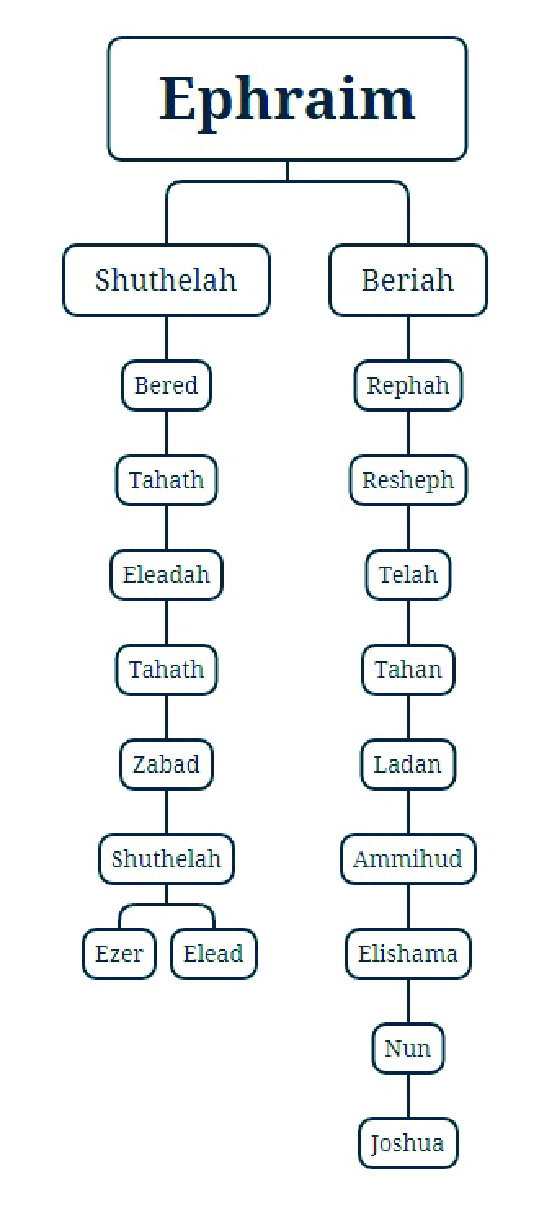
Fig. 1. The genealogy of Benjamin if “his son” indicates straightforward father-son descent.
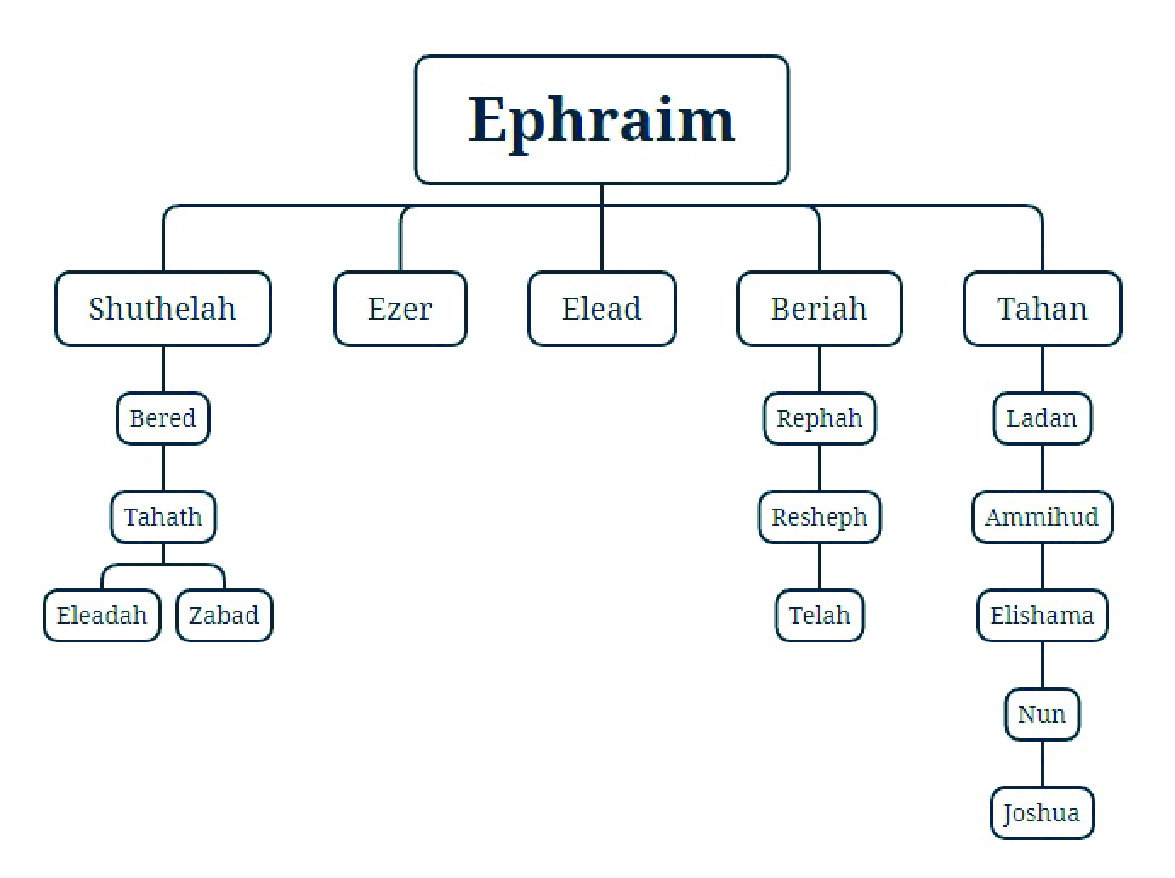
Fig. 2. Proposed reinterpretation based on Numbers 26:35.
“The time that the people of Israel lived in Egypt was 430 years. At the end of 430 years, on that very day, all the hosts of the LORD went out from the land of Egypt.”
This verse seems to straightforwardly support the long sojourn, at least in this particular English translation. There are a number of aspects, however, that support a short sojourn.
First, we must look carefully at the Hebrew text of the verse.
וּמוֺשַׂב בְנֵי יִשְׂרָאֵל אֲשֶׁר יָשְׁבוּ בְּמִצְרָיִם שְׁלֹשִׁים שָׁנָה וְאַרְבַּע מֵאוֺת שָׂנָה
The first three words of the sentence are in a construct chain. The conjunction אֲשֶׁר introduces the relative clause אֲשֶׁר יָשְׁבוּ בְּמִצְרָיִם (’ašer yāšbu bĕmiṣrāîm), and שְׁלֹשִׁים שָׁנָה וְאַרְבַּע מֵאוֺת שָׂנָה (šĕloshîm šānāh w’arba‘ mē’ot šānāh) is “430 years.” This grammar suggests that the ESV translation is not the best way to understand the Hebrew of this verse. Rather, the KJV more literally renders the passage:
“Now the sojourning of the children of Israel, who dwelt in Egypt, was four hundred and thirty years.” (KJV)
This is a subtle distinction, but important, because it no longer specifically says that the sojourning was in Egypt alone. The entire sojourning of the people who dwelt in Egypt was 400 years, but the sojourning didn’t need to be in Egypt alone. This is not a clear short sojourn reading, but it becomes less obviously supportive of the long sojourn.
This also explains textual variants present in the Septuagint (LXX) and Samaritan Pentateuch (SP).
LXX: “Now the residence of the sons of Israel during which they dwelt in the land, Egypt, and in the land of Chanaan was four hundred and thirty years.” (Pietersma and Wright 2007)
SP: “Now the time that the children of Yishra’el and their fathers dwelt in the land of Ka’anan and in the land of Misrem was four hundred and thirty years.” (Florentin and Tal 2024)
The Masoretic Text (MT) only includes Egypt. However, the Septuagint (LXX) and Samaritan Pentateuch (SP) both read “Canaan and Egypt,” which would support the short sojourn. If the LXX/SP accurately reflects the original timeframe, this would be a clear expression of the short sojourn. If it is not original, it reflects, in two separate traditions, the belief that the 430 years includes Israel’s time in both Canaan and Egypt. Differences in phrasing between the LXX and SP seem to indicate that they are secondary to the MT, which is more likely original. However, the existence of two independent textual traditions that add Canaan into the 430 years means that there is a very long tradition of this interpretation, apparently going back to at least a couple of centuries before the New Testament. Josephus reflects this understanding of the passage in Antiquities 2.15.2, indicating that the LXX reading either represents the original or came to be part of the text before the end of the first century:
They left Egypt in the month Xanthicus, on the fifteenth day of the lunar month; four hundred and thirty years after our forefather Abraham came into Canaan, but two hundred and fifteen years only after Jacob removed into Egypt.
A SS interpretation of this passage emphasizes the completion of the period of time and God’s keeping of his promise, not requiring them to be in Egypt the entire period of time. They could also point to the majority of the Second Temple Jewish literature and slightly later literature which interprets the 430 years as beginning with Abraham (Pseudo-Philo 8.14; 9.3–4; Demetrius the Chronographer 2.16; Testament of Moses 1.2; Antiquities 2.15.2).
The long sojourn interpretation emphasizes that it is the sons of Israel who are being discussed, and notes that Jacob, Isaac, and Abraham cannot be called “sons of Israel” in any sense. This is obviously true, but the ancient nature of the short sojourn interpretation of this passage should make it clear that this wasn’t a problem for that interpretation. The book of Hebrews also sets the precedent for the actions of the patriarchs being credited to their descendants:
One might even say that Levi himself, who receives tithes, paid tithes through Abraham, for he was still in the loins of his ancestor when Melchizedek met him.
If Abraham’s tithe could be attributed to the priestly tribe because they were in the loins of their ancestor, surely the sojourning of the patriarchs could be attributed to Israel under the same principle.
Stephen’s Address: Acts 7:6
“And God spoke to this effect—that his offspring would be sojourners in a land belonging to others, who would enslave them and afflict them four hundred years.”
This verse is in Stephen’s address to the Sanhedrin. Responding to the charges against him, Stephen recounts the history of God’s promises and Israel’s unfaithfulness, in an indictment of the Jewish leadership which will result in his martyrdom. In his address, Stephen draws from passages across the historical books of the Old Testament from Genesis to Kings, as well as possible references to extrabiblical Jewish traditions.
Stephen is a Hellenist with a Greek name, who is first mentioned as one of the deacons put in place to resolve the conflict between the Hebrew and Hellenist Jews to ensure their widows were being adequately taken care of. In addition, Stephen cites the LXX 75 persons instead of the MT 70 persons in his speech, which indicates familiarity with the LXX tradition that explicitly includes both Canaan and Egypt in the 430 years. So, just as SS interprets the 400 years in Genesis 15 and the 430 years in Exodus 12 as encompassing both Canaan and Egypt, SS would interpret this 430 years in the same way.
The prediction about being strangers in a country not their own could apply to the period when they were wandering around Canaan as much as to the period when they were in Egypt. The first part of the quotation stresses the suffering they would have to endure (“and they will be enslaved and mistreated”). Enslavement in Egypt is a theme that Stephen develops in connection with the call of Moses (Exodus 7:18–34). Here he takes the round figure of 400 years as the time span of that bondage (as in Genesis 15:13), though Exodus 12:40 records the more precise figure of 430 years (Peterson 2009, 249).
Stephen’s statements take place at a time when there are already well-attested SS interpretations of the relevant Old Testament passages, which seems to be the majority position at that time. Therefore, it can’t be assumed that Stephen is referencing a LS view here.
Paul’s Address: Acts 13:16–20
So Paul stood up, and motioning with his hand said: ‘Men of Israel and you who fear God, listen. The God of this people Israel chose our fathers and made the people great during their stay in the land of Egypt, and with uplifted arm he led them out of it. And for about forty years he put up with them in the wilderness. And after destroying seven nations in the land of Canaan, he gave them their land as an inheritance. All this took about 450 years. And after that he gave them judges until Samuel the prophet.’
In this passage, Paul is presenting the Gospel to the Jews in the synagogue in Pisidian Antioch. Like Stephen, he contextualizes his message within Jewish history, starting with the promise to Abraham. And like Stephen, he gives a timeframe for events including the sojourn in Egypt. But rather than 400 years, he gives a total of 450 years.
Paul’s sequence of events starts with God choosing their fathers—when did this occur? This seems to be when God called Abraham out of Ur (see Nehemiah 9:7). This was when Abraham was 75 years old. (Genesis 12:4). Isaac was born when Abraham was 100; Jacob was born when Isaac was 60; and Jacob when to Egypt when he was 130 years old. That is a total of 215 years. The SS interpretation argues that Israel spent a further 215 years in Egypt, for a total for 430 years. The wandering the wilderness took another 40 years, and the initial conquest took about 6–7 years, based on Caleb’s age at the time. This is a total of about 477 years, which can accurately be called “about 450 years.”
The LS view must put the “choosing our fathers” statement somewhere close to beginning of the stay in Egypt, so LS advocates must justify that exegetical decision.
The Promise of an Offspring to Abraham: Galatians 3:16–18
Galatians 3 is the strongest passage supporting a short sojourn. There are ways to make the grammar compatible with a long sojourn if one only looks at the isolated possibilities of interpreting individual words, but the entire argument is actually undercut in a long sojourn reading.
In Galatians 3, Paul links the Galatians’ hearing with faith (verse 2) with Abraham’s faith, and presents acceptance of circumcision as a rejection of that faith. He uses the 430-year span between the promise to Abraham and the giving of the Law of Moses to recognize that the former precedes, and cannot annul, the latter. Importantly, it also precedes circumcision, which is precisely the practice Paul warns the Galatians against accepting (Paul will develop this argument further in Romans 4). Paul is not primarily concerned with the length of the sojourn here. However, just as 1 Corinthians 15 makes it clear that Paul believed in a historical Adam even though he didn’t rewrite the Genesis narrative, he did not need to give a detailed chronological excursus to indicate that he believed there are 430 years between the promise specifically to Abraham and the giving of the Mosaic law.
Linking the promise to any of the repetitions of the promise that happened later undercuts the argument, because those repetitions took place after Abraham and his descendants adopted the covenant sign of circumcision. It also weakens the identification of the blessing of the nations as part of the promise to Abraham, which Paul emphasizes in verse 14.
The Judaizers presented circumcision as a way for the Galatian Christians to link themselves with the faith of Abraham. Since Abraham was the one to whom the covenant sign of circumcision was given, they made the covenant sign a symbol of Abraham’s faith. To the Jews of the day, not being circumcised was not having faith. The Judaizers likely presented circumcision as a way to be connected with the faith of Abraham.
Paul argues precisely the opposite: accepting circumcision would cut them off from the faith they placed in Christ by aligning themselves with the Law of Moses, which Christ freed them from by dying under the Law. Paul argues that accepting circumcision obligates one to keep the entire Law (see Galatians 5:3). The vocative “O foolish Galatians” communicates Paul’s deep distress at what the Galatians are contemplating and their sheer folly. He uses the word ἀνόητοι “to emphasize the illogicality of the Galatians’ retrogression.” (Bruce 1982, 148). Paul is making a logical argument—the precedent for righteousness through faith precedes circumcision, so for those who have received the Gospel by faith, accepting circumcision, which stands in for all the works of the law, negates their faith in Christ. Paul uses the 430 years between the two promises to place distance between Abraham’s faith and the Law. Rather, he argues that the Galatians’ hearing with faith links them with Abraham’s faith and the promise which had the salvation of the Gentiles as an integral part.
A long-sojourn reading would need to connect Paul’s reference to “offspring” with Isaac and Jacob, who received the repetitions of the promise—especially Jacob, who received a repetition of the promise just before traveling to Egypt with his family and household. But in Galatians 3:16 Paul says:
οὐ λέγει· Καὶ τοῖς σπέρμασιν, ὡς ἐπὶ πολλῶν, ἀλλ’ ὡς ἐφ ἑνος· Καὶ τῶ σπέρματί σου, ὅς εστιν Χριστός.
He did not say, “And to your offsprings,” referring to many, but referring to one, “And to your offspring,” who is Christ.
Paul makes it clear with the use of the words πολλῶν and ἑνος that he is not referring to multiple offsprings, and that he is referring to a singular offspring, and then immediately after that, he identifies the offspring—Christ. It is hard to imagine how Paul could possibly be clearer.
A long sojourn exegesis would have to explain how to read Jacob into a passage that is specifically about the point in time when Abraham believed God and it was counted to him as righteousness, and which sees Christ, not Isaac and Jacob, as the specifically singular offspring to whom the promises were made. The text gives no indication that the repetitions to Isaac and Jacob are in view—Paul specifically states, “And if you are Christ’s, then you are Abraham’s offspring, heirs according to promise” (Galatians 3:29). In Galatians 4, Paul contrasts Abraham’s two children allegorically, linking Ishmael and Hagar with the Jews who are enslaved to the law, and those who have faith in Christ with Sarah and Isaac as heirs to the promise.
Paul sees the promise given to Abraham, who received it by faith, before the command of circumcision. Four hundred and thirty years later, the law was given through Moses, but it did not annul the prior promise. Paul stresses the seniority of the Abrahamic covenant over the Mosaic law, and links believers in Christ with the earlier promise (George 1994, 248).
Population Problems: The Israelite Census
In addition to the passages that directly deal with the timespan of the sojourn in Egypt, we also must account for the growth of Jacob’s family from 70 named persons to about 2 million people. Specifically, Numbers 2:32–33 records 603,500 men over the age of 20, not including the men of the tribe of Levi, who numbered 22,000, counting those a month old and up.
This is sometimes seen as a strong argument for the LS view, because it is easier to arrive at that population size with an extra 215 years. However, this population growth is also possible within a short sojourn timeline.
First, far more than 70 people went down to Egypt with Jacob. The text itself says that the daughters of Jacob’s sons were not counted, nor were the sons’ wives. There would have also been a substantial number of servants. Consider Abraham’s household at the time of the circumcision. He had 318 fighting men who had been born in his household, meaning that his household was much larger than just those hundreds of servants. Isaac inherited all that Abraham had, minus the gifts Abraham gave to Keturah’s children. Jacob became a wealthy man in his own right during his time with Laban, and he inherited a double-portion of Isaac’s inheritance. By the time Jacob’s household was migrating to Egypt, it is not unreasonable to think that 1,000 people or more went with him.
Second, polygyny allows the same number of men to grow the population much quicker, and there is evidence that the Israelites practiced this. In fact, Pharaoh’s strategy of killing the boys was the opposite of what he actually needed to do to slow the population growth, because there was still the same number of girls, all of whom could become mothers. It is also well-established that Israelites freely intermarried with other people groups (Carter 2017).
One possible population growth simulation follows:
A shiny app was built in R to model the development of the Israelite population in Egypt under short sojourn conditions. Starting with the 70 listed founders, and assuming one wife for all the males for whom wives are not listed, we estimate a starting population of descendants of Jacob and their spouses of approximately 120. However, including the mass of servants, we assume a total starting population of 1000. Random mating is assumed for all members of the population. Males are assumed to be polygynic, with an average of 2.5 (±1) wife per man. Number of children per wife is assumed to be 3, with an average population growth rate of 3.5% per year. Males are presumed to rarely (5%) marry wives outside the Israelite community, with females even less frequently (2%). Females who marry out are removed from the population along with their descendants, while women who marry in are included along with their descendants. These parameters were simulated for 215 years.
With those starting parameters, the 120 starting individuals are the descendants of the entire population by year 50. By year 215, the population numbers approximately 2.3 million. This does not factor in Egyptian persecution. However, even if the number is reduced by 10%, the total population would still be greater than 2 million. (H. Sanders pers. comm.)
However, we are given more specifically the number of Gershonites from 30 to 50 years old in Numbers 4:40: 2,630. A second population growth model as follows:
Using a starting population of 4, and a founder size of 2, we modeled the growth of the Gershonites. All other parameters were the same, except annual population growth rate, which was 3.9% yearly. At those parameters, after 200 years, the population was 8400, all descended from the two founders. (H. Sanders pers. comm.)
These reconstructions match the findings of Carter and Hardy: under the right conditions this sort of population growth is possible (Carter and Hardy 2015). The narrative itself suggests that the Israelite people were growing so rapidly that it became a political concern to Pharaoh (Exodus 1:7–12).
Another possible objection is that this does not seem to match what we see in the genealogies. The answer is that the genealogies are accurate, but never claim to be exhaustive. The narrative at the beginning of Exodus records explosive growth of the Israelite population, such that the Pharaoh who did not know Joseph believed the Israelites could be a military asset to Egypt’s enemies if they were not controlled. If the Long Sojourn posits missing generations, the Short Sojourn can posit incomplete lists of offspring. Both are possible answers to the “missing people” in the genealogies that are testified to by the population size.
Conclusion
This discussion of the significant passages for the length of the sojourn establishes that the short sojourn is a reading that has been held by various believers over thousands of years. However, it is impossible to definitively prove one view of the sojourn over the other. People who weigh the evidence differently may come to the opposite conclusion while holding an equally high view of Scripture. A measure of exegetical humility is warranted, therefore, when examining this issue.
References
Albright, W. F. 1961. “Abram the Hebrew: A New Archaeological Interpretation.” Bulletin of the American Schools of Oriental Research 163 (October): 36–54.
Bruce, F. F. 1982. The Epistle to the Galatians: A Commentary on the Greek Text. New International Greek Testament Commentary. Grand Rapids, Michigan: Eerdmans Publishing Company.
Carter, Robert W. 2017. “Extensive Mixing Among Israelites and Non-Israelites in Biblical History.” Journal of Creation 31, no. 3 (December): 112–118.
Carter, Robert, and Chris Hardy. 2015. “Modelling Biblical Human Population Growth.” Journal of Creation 29, no. 1 (June): 72–79.
Florentin, Moshe, and Abraham Tal. trans. 2024. The Samaritan Pentateuch: An English Translation with a Parallel Annotated Hebrew Text. Cambridge Semitic Languages and Cultures. Cambridge, United Kingdom: Open Book Publishers.
George, Timothy. 1994. Galatians: An Exegetical and Theological Exposition of Holy Scripture. The New American Commentary, vol. 30. Nashville, Tennessee: Broadman & Holman.
Hamilton, Victor P. 1990. The Book of Genesis, Chapters 1–17. New International Commentary on the Old Testament. Grand Rapids, Michigan: Eerdmans Publishing Company.
Josephus, Flavius. 1737. Antiquities of the Jews. Translated by William Whiston. https://www.gutenberg.org/files/2848/2848-h/2848-h.htm.
Peterson, David G. 2009. The Acts of the Apostles. The Pillar New Testament Commentary. Grand Rapids, Michigan: Eerdmans Publishing Company.
Pietersma, Albert, and Benjamin G. Wright, eds. 2007. A New English Translation of the Septuagint: And Other Greek Translations Traditionally Included Under That Title. Oxford, United Kingdom: Oxford University Press.
Swanson, James A. 1997. Dictionary of Biblical Languages with Semantic Domains: Hebrew (Old Testament). Oak Harbor, Washington: Logos Research Systems.
Turpin, Simon. 2022. “Did Abraham Really Live 175 Years?” Answers in Genesis (December 6). https://answersingenesis.org/bible-characters/did-abraham-really-live-175-years.